
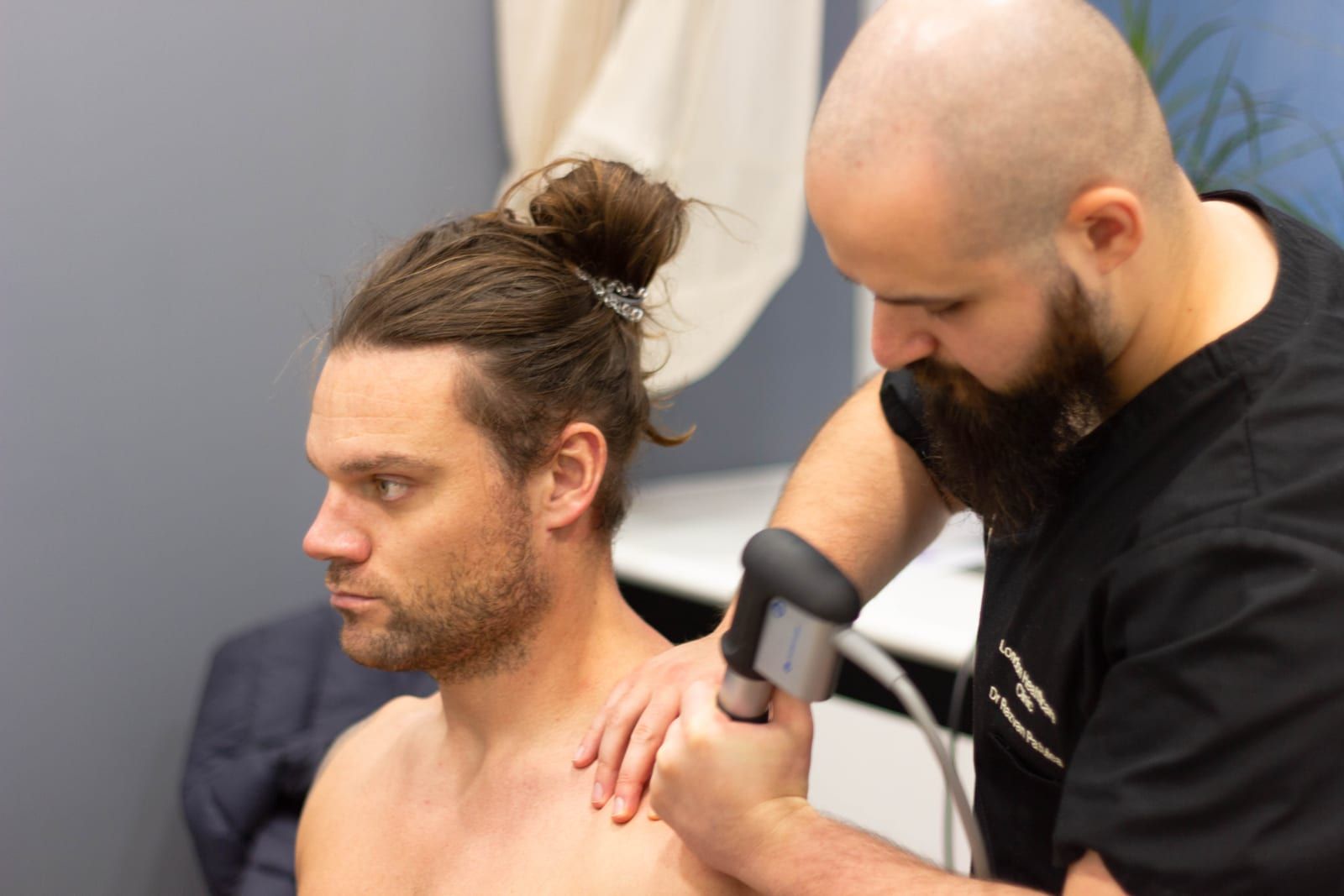

You finish physiotherapy for a knee injury. Your physio discharges you, tells you to keep strengthening it, and sends you back into the world. The problem is that most gyms are not set up to pick up where clinical care left off. The trainer on the floor has a general fitness qualification and good intentions, but no particular expertise in what your knee needs next. That gap is where a lot of recoveries stall.
It is also the gap that a training studio inside a healthcare clinic is specifically built to close.
The Difference Between Being Near a Clinic and Being Inside One
There is a version of this that is mostly marketing. A gym puts a physio room in the corner, lists it on the website, and carries on operating as a gym. The clinical and training sides rarely speak to each other in any meaningful way.
What we have at Elevate LDN is different in a practical sense. The studio sits inside London Healthcare Clinic at 38 Lombard Street, sharing a building with physiotherapists, chiropractors, osteopaths, sports massage therapists and podiatrists. These are not partner businesses in a loose referral arrangement. They are colleagues working in the same space, available to speak to a trainer the same day if a session surfaces something that needs clinical input.
That proximity changes what a personal trainer can actually do for you. Not in theory. In the day-to-day reality of how sessions are planned and what happens when something unexpected comes up.
What Happens When a Training Session Surfaces a Problem
Here is a scenario that comes up regularly. A client comes in for strength work. During the warm-up, they mention that a movement has been causing discomfort for a few weeks. In a standard gym, the trainer modifies the session, maybe suggests the client sees a physio at some point, and moves on. The clinical input, if it happens at all, happens separately and later.
In a shared clinical setting, the trainer can walk down the corridor and speak to a physiotherapist or chiropractor that day. The client can be assessed by a clinician before the session ends, or booked in for the following morning. The training programme is then adjusted based on what the clinical assessment finds, not based on the trainer’s best guess.
This is not a dramatic intervention. It is just a faster, more joined-up response to something that would otherwise sit unaddressed for weeks.
How Rehabilitation Training Works Differently Here
Rehabilitative personal training is one of the most misunderstood services in fitness. It is not just training with lighter weights or avoiding certain exercises. Done properly, it requires a coach who understands how the body compensates after injury, where movement restrictions come from, and how to load tissue progressively without aggravating the underlying problem.
The trainers at Elevate LDN who work in rehabilitation hold certifications that reflect that: DNS Exercise Trainer, NASM Corrective Exercise Specialist, PRI, Level 5 Sports Therapy. These are not general fitness qualifications. They require a diagnostic view of movement, and the thinking that comes with them carries into every session.
The clinical setting reinforces this in a specific way. A trainer working with someone returning from back surgery can align their programme with what the client’s physiotherapist or chiropractor is doing in parallel. If the clinical picture changes, the training changes with it. The two sides of the client’s care are not running independently; they are informed by each other.
One client with a slipped disc in his lower back worked with us over more than a year. He described the process as one where he always felt safe in the exercises he was given, and where the progress was consistent and measurable. He went from managing significant pain to being virtually pain-free and working toward returning to sport. That kind of outcome is not just about the trainer’s skill. It is about having the right clinical environment around the training.
What This Means for People Who Are Not Injured
It is worth being direct about this: the clinical setting is not only relevant if you are recovering from something. It matters for anyone whose training touches on how their body moves under load.
A golfer working on swing mechanics is dealing with hip rotation, thoracic mobility and core stability. These are not purely fitness questions. The line between a mobility restriction that responds to training and one that has a clinical cause is not always obvious. Having clinicians available to consult means that line gets identified correctly, rather than a trainer working around something that actually needs clinical attention.
The same applies to someone doing strength and conditioning work who develops a persistent tightness in a hip or shoulder. Or a runner building mileage who starts to notice asymmetry in how their legs feel. In each case, the clinical proximity means the question gets answered properly rather than managed around.
The Specialist Matching Model
The clinical setting is one part of what makes training here different. The other is how clients are matched to trainers.
Most personal training operations assign clients to whoever is available. At Elevate LDN, every trainer focuses on a specific discipline. The nine trainers across the studio cover eight areas: rehabilitation, TPI golf fitness, body transformation, muscle gain, boxing, sports performance, pre and postnatal, and strength and conditioning. When a client comes in, they are matched to the specialist whose qualifications and experience fit their goals.
This matters because the depth of knowledge in a specialism is genuinely different from general fitness knowledge. A trainer who has spent years working specifically with post-surgical rehabilitation, or specifically with endurance athletes, or specifically with pre and postnatal clients, has a level of pattern recognition and practical experience that a generalist cannot replicate. The clinical environment amplifies this: a rehabilitation specialist working alongside chiropractors and physiotherapists develops a clinical literacy that shapes how they think about every client, not just the ones with obvious injuries.
You can see the full team and their individual specialisms on the Meet Our Specialist Personal Trainers page.
The Practical Environment
The studio itself is worth describing plainly, because the physical environment affects what is possible in a session.
Elevate LDN caps concurrent training at five sessions. At any given time, there are at most five clients training on the floor. This is not a selling point dressed up as a policy; it is a structural decision that keeps the environment focused and the equipment available. There are no queues, no waiting for a rack, no noise that makes it hard to communicate during a session.
The studio is three minutes from Bank and Monument stations, which matters for City professionals fitting training around a working day. Changing rooms, showers, towels and toiletries are provided, so clients can train before work or at lunch and go straight back to the office. There are no contracts or monthly fees. You book sessions; you do not join a gym.
For more on the physical setup, the studio page has the detail.
Assessment Before Prescription
Across every discipline at the studio, the consistent starting point is assessment. Before a programme is built, a trainer needs to understand how a client’s body moves, where the restrictions and weaknesses are, and what the realistic starting point is. This is not a formality. It is the difference between a programme that fits the person in front of you and a template applied to whoever walked in.
This approach is reinforced by the clinical setting. Trainers who work alongside physiotherapists and chiropractors every day absorb a more rigorous diagnostic habit. The question is not just “what does this client want to achieve” but “what does this client’s body currently allow, and what needs to change first.”
For someone coming in for body transformation, that might mean identifying a movement restriction that needs addressing before heavier loading makes sense. For someone starting pre and postnatal training, it means understanding exactly where they are in their pregnancy or recovery and what the appropriate load and focus is at that point. For a golfer, it means a TPI screen that maps the physical limitations affecting their swing before any conditioning work begins.
The assessment is not a box-ticking exercise. It is the foundation the programme is built on.
Is This the Right Environment for You
The honest answer is that it depends on what you need.
If you want a large gym with lots of equipment options, group classes and a social atmosphere, this is not that. Elevate LDN is a private, specialist studio. It is quiet, focused and clinical in the best sense of that word.
If you want to train with someone who knows their specific area deeply, in an environment where clinical support is genuinely available rather than nominally on offer, and where the programme is built around your body rather than a generic template, then the setup here is worth understanding properly.
The best starting point is a consultation. It costs nothing to have a conversation about what you are trying to achieve and whether the right specialist is here to help you do it. You can find directions and contact details on the Find Us page, or browse the full range of personal training services in the City of London to get a clearer picture of what each discipline involves.